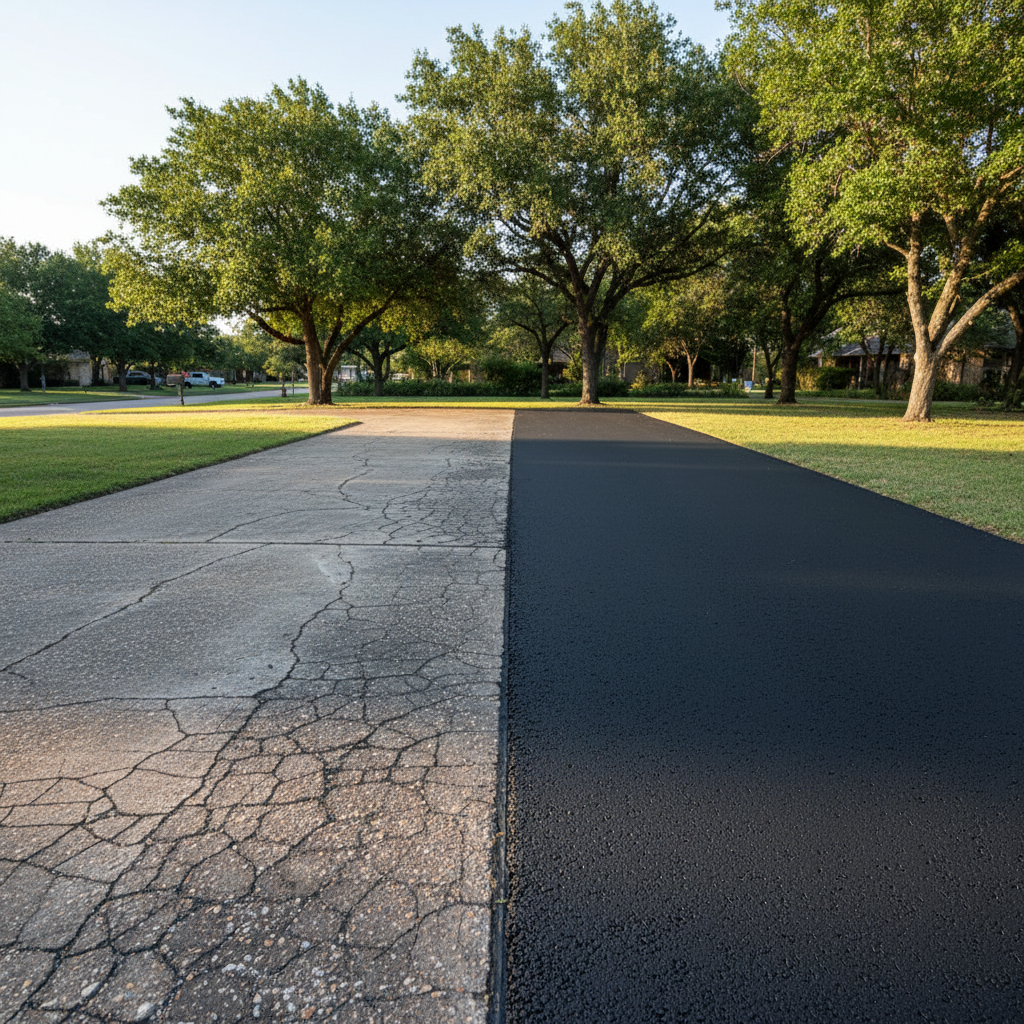
Is your driveway looking a bit rough? Maybe you've got some cracks, a pothole or two, or just a generally worn-out surface. When that happens, homeowners often wonder if they can just patch it up or if it's time to bite the bullet and get a whole new asphalt pavement. It's a common question, and honestly, there's no one-size-fits-all answer. It really depends on the extent of the damage and what you're hoping to achieve.
Asphalt Patching: The Quick Fix
Let's talk about patching first. This is usually the go-to for isolated issues. You've got a pothole, a small section of alligator cracking, or maybe some edge deterioration. Patching involves removing the damaged section of asphalt, preparing the base underneath (if needed), and then filling it with new hot asphalt mix. We compact it down, and boom, you're good to go.
The Good Stuff About Patching:
- Cost: It's almost always cheaper upfront than a full replacement. You're only paying for materials and labor for a small area, not your entire driveway.
- Speed: We can get in and out pretty quick. A few hours for a typical residential patch, and you can usually drive on it the same day once it's cooled.
- Targeted Repair: If 90% of your driveway is in good shape, why tear it all out for one bad spot? Patching makes sense for localized problems.
Where Patching Falls Short:
- Appearance: Let's be real, a patch is a patch. It's going to stand out. The color will be different, and you'll see the seams. It's not going to look seamless and brand new.
- Durability (Limited): A good patch will hold up, but it's only as strong as the surrounding pavement. If the rest of your asphalt is old and failing, new cracks will likely form around the patch or elsewhere on the driveway pretty soon. It's like putting a new tire on a car with a failing engine – it helps, but doesn't solve the core problem.
- Underlying Issues: If your potholes are popping up because of a poor sub-base or drainage problems, a patch won't fix that. You'll keep getting new potholes in the same general area. I've seen this a lot in older Kyle neighborhoods, especially with some of that expansive clay soil we deal with. If your base isn't stable, no amount of patching will give you a long-term solution.
New Asphalt Pavement: The Fresh Start
Now, let's consider a full new asphalt pavement. This means we're tearing out your old driveway completely, preparing the sub-base, and then laying down a fresh layer (or layers) of asphalt. It's a bigger job, no doubt about it.
The Benefits of New Pavement:
- Appearance: This is where it shines. A brand new asphalt driveway looks fantastic. It's smooth, uniform, and instantly boosts your home's curb appeal. No patchwork quilt look here.
- Durability: When done right, a new asphalt driveway can last 15-20 years, sometimes more, especially with proper maintenance. You're starting fresh with a solid foundation.
- Long-Term Value: While the upfront cost is higher, you're getting a much longer lifespan out of it. You won't be calling me every year for another patch. Over the long haul, it can actually be more cost-effective.
- Addressing Core Problems: With a full replacement, we can properly address any drainage issues or sub-base problems that might have contributed to your old driveway's failure. This is crucial for our Texas weather, where heavy rains can really mess with an unstable base.
The Downsides of New Pavement:
- Cost: Yeah, it's more expensive. There's more labor, more material, and the cost of hauling away the old stuff.
- Time: It takes longer. We're talking days, not hours, for a full tear-out and replacement. You'll have limited access to your driveway during the process.
- Disruption: There's more equipment, more noise, and more mess involved with a full replacement.
So, What's My Recommendation for Kyle Homeowners?
Look, if you've got a few minor, isolated cracks or a single pothole, and the rest of your driveway is generally sound, a patch can definitely extend its life for a few more years. It's a good temporary solution or a way to squeeze a bit more time out of an aging surface before you commit to a full replacement.
However, if your driveway looks like a spiderweb of cracks, has multiple potholes, or if parts of it are sinking or crumbling – especially if it's over 10-12 years old – you're probably throwing good money after bad with patches. You'll keep patching one spot only to have another pop up. In those cases, a new asphalt pavement is almost always the better long-term investment. You'll get a beautiful, durable surface that adds real value to your home and saves you headaches down the road.
Give Mighty Paving Solutions a call. We can come out, take a look at your driveway, and give you an honest assessment of what's going on and what your best options are. No pressure, just good advice from a local who knows our Kyle conditions.