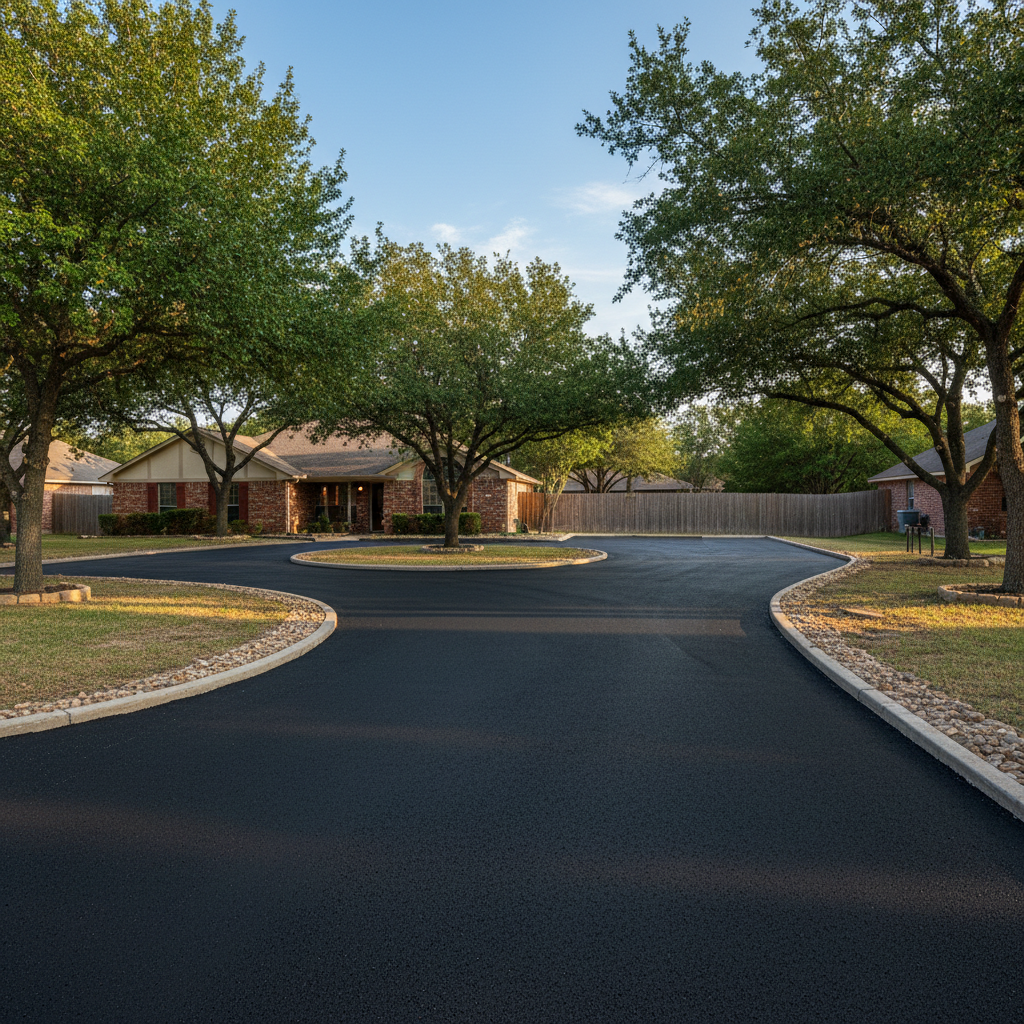
Alright, let's talk about slurry seal. If you've got an asphalt surface – whether it's a parking lot, a private road, or even a long driveway – and it's starting to look a little worn, but isn't completely falling apart, slurry sealing is often a great option. It's a cost-effective way to extend the life of your pavement, protect it from the elements, and give it a fresh, dark look. But what's it actually going to cost you here in Kyle?
First off, forget about a one-size-fits-all price. That's just not how it works. A lot of factors go into the final number, and any contractor who gives you a flat rate without seeing the job is either guessing or not being upfront. Here's what I look at when I'm putting together a quote:
What Drives Slurry Seal Pricing?
- Size of the Area: This is the big one, obviously. The more square footage you need covered, the more material and labor it's going to take. However, the price per square foot usually goes down as the total area increases. A small residential driveway might cost more per square foot than a massive commercial parking lot.
- Current Condition of the Pavement: Is your asphalt relatively smooth with just some minor cracking, or are there potholes and significant alligator cracking? Slurry seal isn't a miracle cure for severely damaged pavement. If we have to do a lot of crack filling, pothole patching, or extensive cleaning beforehand, that's going to add to the prep work and, naturally, the cost.
- Type of Slurry Mix: There are different grades and types of slurry. For most applications around Kyle, we're typically talking about a Type II or Type III slurry, which uses different aggregate sizes. The right choice depends on the existing surface and expected traffic.
- Accessibility and Site Logistics: Is it easy for our equipment to get in and out? Are there a lot of obstacles like light poles, curbs, or landscaping that we have to work around? A complex layout with lots of tight turns and intricate cuts takes more time and precision than a wide-open, rectangular lot.
- Traffic Control Needs: For commercial jobs, especially on busy streets, we might need to factor in traffic control, signage, and even flaggers to keep everyone safe. That's an added expense.
- Number of Coats: Most slurry seal applications are a single coat, but sometimes a second coat is recommended for extra durability or a smoother finish, which will increase material and labor costs.
Typical Cost Ranges in Kyle, TX
Okay, I know you want numbers, so let's get down to it. Based on what I've seen around Kyle, from the older neighborhoods near downtown to the newer developments like Plum Creek, you're generally looking at:
- Residential Driveways (smaller, 500-1,500 sq ft): This can run anywhere from $0.75 to $1.50 per square foot. A small, simple driveway might be on the lower end, while a longer, more complex one with significant prep could be higher. So, a 1,000 sq ft driveway could be $750 to $1,500.
- Larger Residential/Small Commercial (1,500-5,000 sq ft): For areas this size, the price often drops a bit due to economies of scale, usually in the range of $0.60 to $1.00 per square foot. So, a 3,000 sq ft area might be $1,800 to $3,000.
- Commercial Parking Lots/Roadways (5,000+ sq ft): For bigger projects, you'll typically see prices from $0.45 to $0.80 per square foot, or even lower for very large jobs. A 10,000 sq ft parking lot could be $4,500 to $8,000.
Keep in mind, these are just averages. Your specific quote could be higher or lower depending on those factors I just mentioned. For instance, if your asphalt has a ton of cracks that need filling – and we see a lot of that here with our expansive clay soils – that prep work could push the price up.
What Should a Mighty Paving Solutions Quote Include?
When you get a quote from me or any other reputable contractor, it should be clear and detailed. Here's what you should expect:
- Total Square Footage: Clearly stated.
- Scope of Work: What exactly are we doing? Is it just slurry, or does it include crack filling, patching, sweeping, and cleaning?
- Material Type: What kind of slurry mix are we using?
- Number of Coats: One or two?
- Timeline: When do we expect to start and finish?
- Warranty Information: What kind of guarantee do you get on the work?
- Traffic Control: If applicable, what's included?
- Total Cost: The final price, no hidden fees.
How to Avoid Overpaying
It's your money, so you want to make sure you're spending it wisely. Here are my tips:
- Get Multiple Bids: Always get at least three quotes. This helps you compare not just prices but also the scope of work and contractor professionalism.
- Check References and Reviews: Don't just take their word for it. Ask for local references or check online reviews. You want someone with a good track record right here in Hays County.
- Understand the Prep Work: Ask what's included in the preparation. A cheap quote might skip crucial steps like proper cleaning or crack sealing, which means your slurry won't last as long.
- Don't Go for the Cheapest Option Automatically: The lowest bid isn't always the best value. Sometimes, paying a little more upfront for quality materials and thorough prep work saves you a lot of headaches and money down the road.
- Ask About Experience: How long have they been doing slurry sealing specifically? Do they have experience with projects similar to yours?
Slurry sealing is a smart investment for your asphalt, especially if you catch it before major damage sets in. Do your homework, ask the right questions, and you'll get a great result that lasts for years.