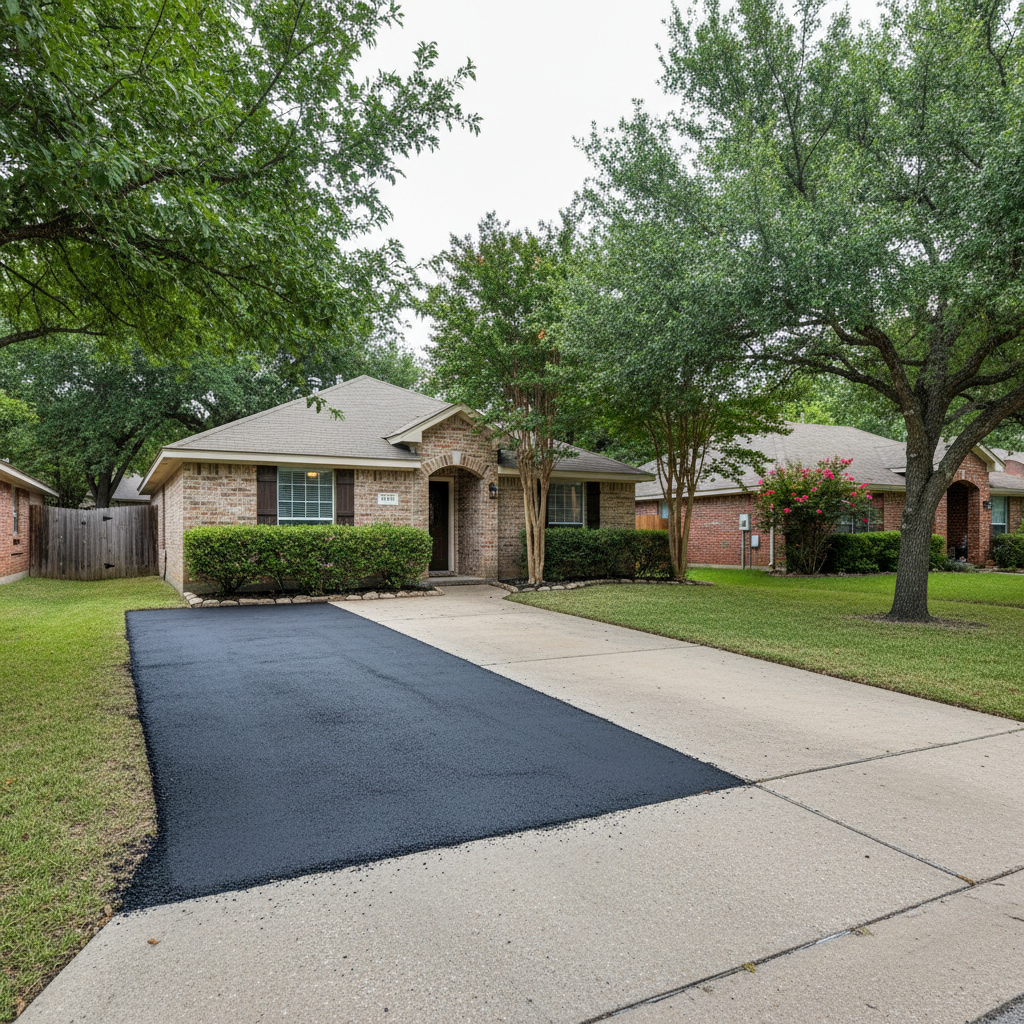
See that pothole popping up in your driveway? Or maybe those spiderweb cracks are just getting worse? You're definitely not the only one. Here in Kyle, I see this kind of thing all the time. Asphalt patching isn't just about throwing some hot mix into a hole; it's about figuring out why that damage happened in the first place and then making sure it doesn't just come right back.
I've been working on driveways and parking lots around here for years. We've done jobs from the older homes near downtown Kyle all the way to the newer developments out towards Plum Creek. And what I've learned is that our local conditions really play a huge part in how asphalt acts and exactly how we need to fix it.
Why Asphalt Cracks Up Around Here
You might think asphalt is asphalt, right? Well, not quite. Our Central Texas climate is really tough on pavement. We get those scorching summers, where the heat makes everything expand, followed by occasional freezes in winter that shrink it all down. This constant expanding and shrinking, especially when water gets into those tiny cracks, is a recipe for disaster. That's how small cracks turn into big ones, and big ones become potholes, you know?
Then there's our soil. We've got a lot of expansive clay around Kyle. When it rains, that clay swells up, and then it shrinks when it dries out. This movement underneath your asphalt can really stress the pavement, leading to cracks and uneven surfaces. It's kind of like building a house on a trampoline – eventually, something's going to give. A good patch job isn't just about fixing the surface; it's about tackling those underlying issues if we can, or at least making sure the patch can handle the movement.
Common Patching Jobs I See
What kind of patching projects do we usually handle? It's a pretty wide range, but some themes definitely show up again and again:
- Potholes: These are the obvious ones. They start small, often after a heavy rain, and then just grow. Ignore them, and you'll get more damage to your vehicles and a bigger, more expensive repair later on.
- Utility Cuts: Ever had a plumber or an electrician dig up your driveway? They usually just backfill it and throw some asphalt on top. Often, they don't do it right, and that patch starts to sink or crack around the edges pretty quickly. We come in and make sure those cuts are fixed correctly, so they blend in and last.
- Alligator Cracking: This is when your asphalt looks like alligator skin – a whole network of interconnected cracks. It usually means the base layer underneath is failing, or the asphalt itself is just old and brittle. You can patch individual sections, but sometimes it's a sign you might need a bigger repair down the road.
- Edge Deterioration: The edges of driveways and parking lots often take a beating. Vehicles driving off the paved surface, water runoff, or just general wear and tear can cause the edges to crumble. Patching these areas early can prevent the damage from spreading inwards.
I've seen driveways in neighborhoods like Kensington where the original paving wasn't quite good enough for our local conditions, and they start showing wear much faster than they should. Or commercial parking lots near Kohls where heavy truck traffic creates deep ruts. Each situation needs a slightly different way of doing things.
Why You Need Local Expertise for Asphalt Patching
You could call any paving company, sure. But if they're not familiar with Kyle, they might not really get the nuances. They might use a generic approach that works fine in, say, New York, but fails miserably here.
Here's what a local contractor like Mighty Paving Solutions offers:
- We Know Local Materials: We know which asphalt mixes stand up best in our heat and with our soil. Plus, we know the best suppliers for quality materials right here in the area.
- We Understand Climate Impact: We've seen firsthand how our summers, winters, and flash floods affect pavement. This knowledge guides our repair methods, from how we prep the surface to the type of sealants we suggest.
- We're Familiar with Regulations: While patching is usually a smaller job, if you're dealing with a commercial property or a larger repair, knowing local codes and permitting rules can save you a lot of grief.
- We Have Experience with Local Soil Conditions: As I mentioned, that expansive clay is a big deal. We know how to prepare the sub-base to minimize future issues, even with just a patch job. Sometimes that means digging out more than you'd expect, or using specific compaction techniques.
- Quick Response Times: When you've got a growing pothole, you don't want to wait weeks for someone to show up. Being local means we can usually get to you faster and get the job done efficiently.
When we do a patch job, whether it's a simple cutout and fill or a more extensive dig-out, we always focus on proper preparation. That means cleaning out the damaged area thoroughly, cutting neat edges, applying a tack coat to make sure the new asphalt bonds correctly, and then compacting the new material properly. Skip any of those steps, and that patch won't last.
Don't let those small cracks turn into big problems. A timely, well-done asphalt patch can really extend the life of your driveway or parking lot and save you a lot of money in the long run. If you're seeing signs of wear, give us a call. We're right here in Kyle, and we know what it takes to keep your pavement looking good and performing strong.