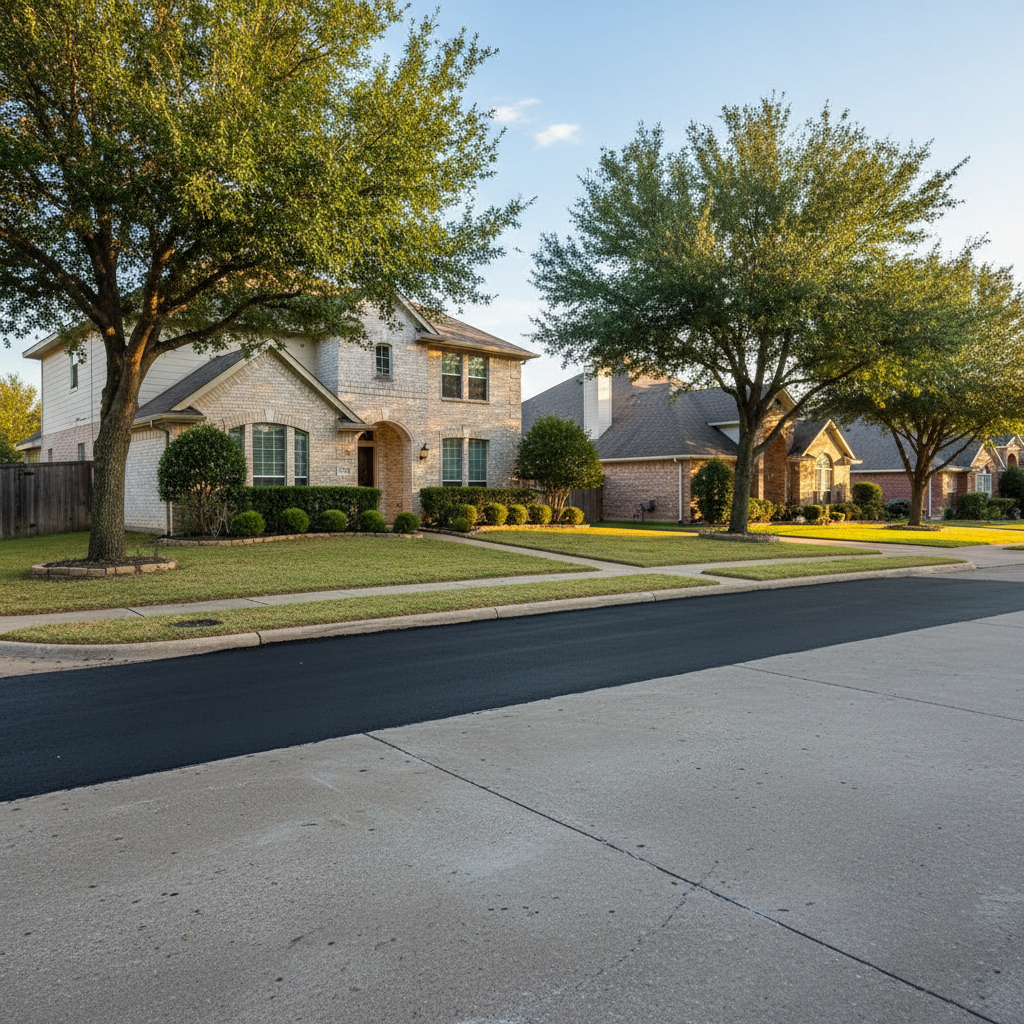
Walking out to a driveway on a scorching July afternoon in Kyle, Texas often reveals asphalt looking soft around the edges. Mighty Paving Solutions sees this issue across Hays County. When living in this region, pavement takes a daily beating from relentless Central Texas sunshine and unpredictable weather swings. Dealing with a small crack or a crumbling spot turning into a hazard requires prompt attention because waiting around only makes the repair bill bigger later on.
Many property owners do not realize that local soil is the main culprit behind failing pavement. Much of Kyle sits on active Blackland Prairie clay. During long, bone-dry summer stretches, that clay shrinks and pulls away from the driveway base. When a sudden downpour hits, the clay swells right back up, and the asphalt loses its underlying support. That constant shifting creates stress fractures that quickly turn into gaping holes if caught too late.
Why Standard Patching Kits Usually Fail Here
Running down to the local hardware store for a bucket of cold-patch might seem like an easy weekend fix. Throwing generic filler into a hole without prepping the subgrade is a waste of money. Those store-bought bags lack the structural integrity needed to handle heavy vehicle traffic combined with the local climate.
- Surface-only fixes pop right out under the first heavy delivery truck.
- Failing to address sub-base voids means the hole will reappear next season.
- Ignoring drainage lets trapped water weaken the surrounding pavement.
A proper patch requires cutting out the damaged area completely, clearing out compromised base material, and compacting fresh aggregate before any hot-mix asphalt goes down. Mighty Paving Solutions matches the asphalt mix to local temperature conditions so the patch binds tightly with the surrounding driveway rather than shearing off when things heat up.
Timing Your Repairs Around Central Texas Seasons
Property owners cannot just slap a patch down whenever they feel like it. Spring brings heavy rains that saturate the ground, while mid-summer temperatures bake the surface past 100 degrees. Getting ahead of the rainy season by sealing up cracks and repairing weak spots keeps water from migrating under the sub-base. If a subdivision was built during the rapid growth boom over the last couple of decades, the driveway is likely hitting the age where minor surface distress starts turning into structural wear. Addressing those problem spots now saves homeowners from paying for a total replacement down the road. Keeping an eye on pavement, tackling issues while they are small, and maintaining the property keeps everything looking solid year-round.